


Birth is a natural process that a woman's body gradually prepares for during pregnancy.Although you cannot plan exactly how it will go, there is a lot you can do to approach it with more confidence and trust in your body.
Breathing, movement, the ability to work with tension and relaxation, and knowing what options you have during labour can all be part of your preparation.
So how can you make birth easier? Let's look at a few things you can try during pregnancy.
How to prepare for birth
Fear of giving birth is often linked to uncertainty and not knowing what to expect. Good, clear information about how labour usually progresses and what options you have can help.
Find out how birth typically unfolds, what your chosen maternity hospital offers, which pain relief options are available and which positions you can use during labour. An antenatal class, a consultation with a midwife or other forms of birth preparation can also help.
Alongside information, it is worth getting to know your own body. Try different positions, notice your breathing and learn to recognise the difference between tension and relaxation. Being able to work consciously with your pelvic floor, not only to engage it but also to relax it, can be an important part of preparing for birth.
Breathing and relaxation during labour
Your breath is one of the simplest tools you always have with you during labour. You don't need to count seconds or remember complicated breathing techniques.
Conscious breathing can help you focus on your body, work with tension and find relaxation again between contractions. What matters most is breathing naturally, not holding your breath and finding a rhythm that feels comfortable for you.
The ability of muscles to relax is just as important as their activity, and this also applies to the pelvic floor. During pregnancy, the goal is therefore not to strengthen it, but to be able to feel the muscles, engage them consciously and let them relax.
Simple relaxation techniques, using your voice, music or visualisation can also help. Every woman may find something different helpful. What matters is finding what works for you.
Movement and birth positions
If the course of labour and your health allow it, you don't have to stay in one position. Moving and changing positions lets you respond to what feels right for your body at any given moment.
Some women prefer walking or standing, others lying on their side, being on all fours, kneeling, squatting or leaning forward with support.
There is no single birth position that is best for every woman and every stage of labour. Try changing positions and notice in which one you can breathe well, relax and feel safe.
How to ease labour pain
Labour pain is very individual, and both its intensity and the way a woman experiences it can change as labour progresses.
There are non-medical ways of easing pain that can help some women cope better with contractions and rest between them. If these are not enough, medical pain relief is also available.
Birth is not a competition in how much pain a woman can handle. The way you relieve pain is a personal choice, and it is fine to use whatever you need at the time.
Warm water
A warm shower or bath can be a pleasant way to relax during labour. Warmth can help release muscle tension, and some women find it eases contractions.
If you are thinking about using a birth pool or having a water birth, check the options and conditions at your chosen maternity hospital in advance.
Massage and touch
Some women find a back or lower back massage helpful during labour, or pressure and touch from their partner or doula.
The intensity, place and timing of touch are very individual. What feels good between contractions may not feel good during them, and the other way round. So don't be afraid to say what you need right now.
Relaxation and visualisation
Some women find it helps to focus on their breath, others prefer music, a familiar voice, silence or imagining something familiar and pleasant.
You can picture a contraction as a wave that gradually builds, reaches its peak and then fades away. The point is not to ignore the pain, but to find a way that helps you move through each contraction and rest again in between.
An environment where you feel safe
Birth is a very intimate event. An environment in which a woman feels safe and respected can support her ability to focus on herself and her body.
Some women like dim light and silence, others their favourite music or the presence of someone close. Being able to move, having privacy and communicating with the people who support you during labour can also be important.
Don't be afraid to say what you need. And keep in mind that what you wanted before the birth may not feel right during it. A birth plan can be a support, not a script you have to follow at all costs.
How to prepare your pelvic floor for birth
The pelvic floor plays an important role during birth. Preparing it does not only mean strengthening it. It also matters that you can feel this area and recognise when the muscles are active and when they relax.
You can practise this connection between breathing, sensing pressure and working consciously with your pelvic floor towards the end of your pregnancy.
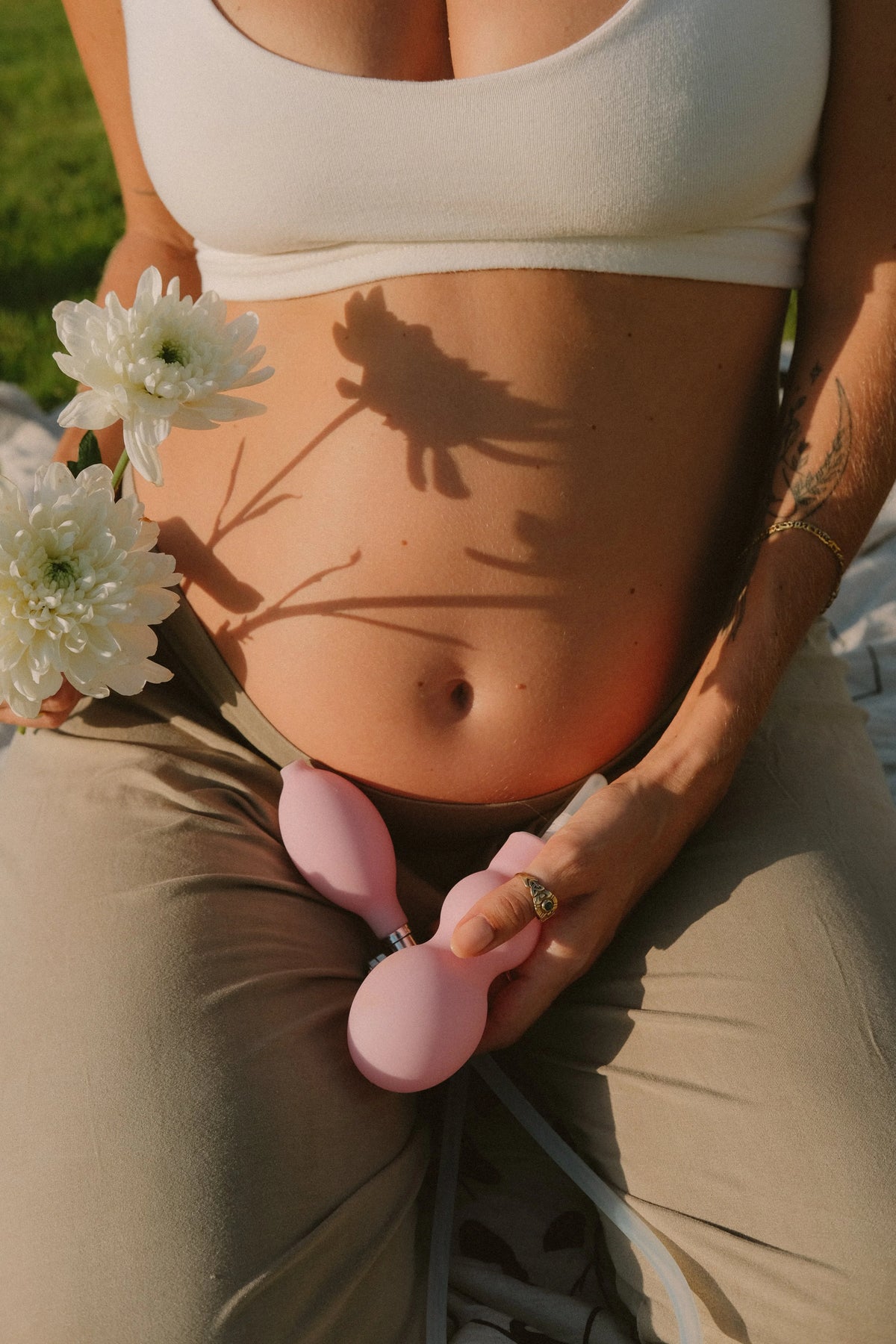
Aniball can be used for this kind of birth preparation. It helps you become more aware of your pelvic floor and learn to relax it consciously through your breath. Thanks to the gentle pressure of the balloon, you can explore safely and at your own pace how to respond to this sensation with breathing and relaxation.
Aniball is not about centimetres or pushing your body's limits. The goal is not to reach a particular balloon size. The exercise should be gentle, controlled and pain-free, and it helps you learn to sense pressure in the pelvic floor area and respond to it with your breath and conscious relaxation.
Start using Aniball no earlier than 37+0 weeks of pregnancy and always follow the current Instructions for Use. If any of the contraindications apply to you, or if you are not sure whether the exercise is suitable for you, talk to your doctor or midwife.
Being prepared does not mean having birth under control
Every birth is different. Even the best preparation cannot guarantee how your labour will go, how long it will take or how intense the pain will be.
But it can help you get to know your body better, feel more confident and have more options to use during birth.
Take your time, don't compare yourself with others and don't see birth as a performance. Prepare with respect for your body, knowing that your needs may change even during the birth itself.


